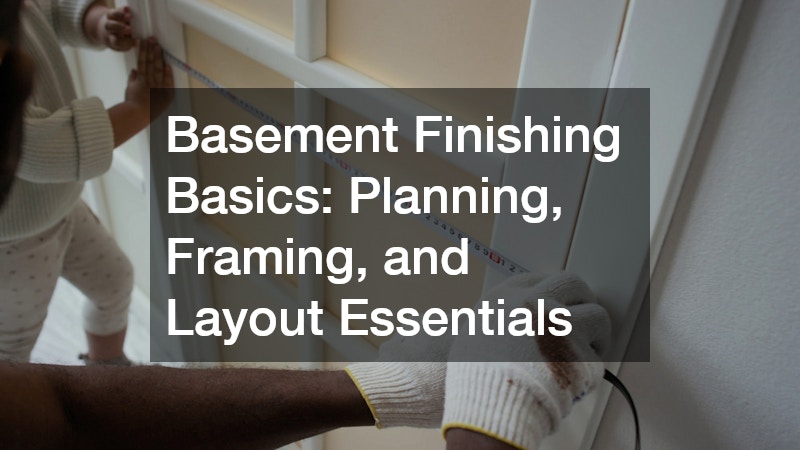
Basement finishing is one of the most effective ways to increase livable square footage and add long-term value to a home. When done correctly, it transforms unused or unfinished space into something functional and comfortable. However, successful basement finishing depends heavily on what happens before any walls go up or floors are installed. This guide walks through those essential early-stage decisions so homeowners can approach the process with clarity and confidence.
Planning Your Basement Finishing Project
The first step in basement finishing is evaluating the existing conditions of the space. Moisture issues, ceiling height limitations, and structural elements like support beams or foundation walls all play a major role in what is possible. Ignoring these factors early can lead to costly corrections later, so a thorough inspection is essential before any design work begins.
Building codes and permits are another critical consideration. Most municipalities require permits for basement finishing projects, especially when adding bedrooms, bathrooms, or electrical work. Understanding these requirements upfront helps prevent delays and ensures the project meets safety standards.
Budgeting is also a major part of planning. Costs can vary widely depending on material choices, labor needs, and the complexity of the design. Homeowners should also define the primary purpose of the space early on—whether it will serve as a family room, guest suite, home office, or multi-use area.
Identifying Moisture and Insulation Needs
Before construction begins, moisture control must be addressed. Basements are naturally prone to dampness, so checking for leaks, condensation, or foundation cracks is essential. Even minor water issues should be resolved before proceeding.
Proper waterproofing systems, including sealants and vapor barriers, help prevent future damage. Insulation is equally important, as it directly affects comfort and energy efficiency. Without it, basements can feel cold and uninviting year-round.
Framing Essentials for Basement Finishing
Framing forms the structural backbone of basement finishing. It defines the shape of the space and provides support for drywall, insulation, and utilities. Most basement walls are constructed using either wood or metal studs, each offering different advantages depending on moisture levels and design preferences.
Proper spacing and alignment are crucial during framing. Walls must be square, level, and securely anchored to ensure long-term stability. Because basements often contain obstacles such as ductwork, pipes, and support beams, framing must be carefully planned around these features rather than forcing them into the design.
Understanding Load-Bearing Considerations
Not all walls serve the same purpose. Some are purely partition walls, while others may interact with structural loads. Understanding the difference between load-bearing and non-load-bearing walls is essential for safety.
Load paths determine how weight is distributed through the structure of the home. If these are altered incorrectly, it can compromise stability. For this reason, it is often necessary to consult a professional before modifying or adding certain framed sections.
Electrical and Plumbing Rough-In Coordination
Framing must also account for mechanical systems. Electrical wiring, plumbing lines, and HVAC components should all be considered before walls are closed up. Coordinating these systems early helps avoid rework and unnecessary demolition later.
Access points for maintenance should also be planned into the framing design. This ensures future repairs can be completed without damaging finished surfaces.
Designing an Effective Basement Layout
A successful basement finishing project depends heavily on layout design. The goal is to create a functional flow that divides the space into usable zones without making it feel cramped or disconnected. Common divisions include entertainment areas, storage zones, bedrooms, and utility spaces.
Ceiling height and lighting conditions should also influence the layout. Lower ceilings may benefit from open designs, while higher ceilings allow for more defined rooms. Safety requirements, including egress windows or exits for bedrooms, must also be factored into the design to meet building codes.
Final Preparation Before Finishing Work Begins
Before moving into the finishing phase, it is important to review all framing for accuracy. Walls should be straight, level, and properly secured. Any layout adjustments should be made at this stage rather than after finishing materials are installed.
Code compliance is another key checkpoint. Inspections may be required to verify structural integrity, electrical safety, and plumbing standards before proceeding.
Once inspections are complete, the space should be fully prepared for drywall, flooring, and other finishing materials.
Basement finishing is most successful when it begins with careful planning, precise framing, and intentional layout design. These early steps determine not only the functionality of the space but also its long-term durability and comfort. By addressing structural conditions, coordinating systems properly, and designing with purpose, homeowners can avoid costly mistakes and create a basement that adds real value to the home.